Seven Days, One Loop: Your Beginner's Guide to Driving the NC500 Without the Panic
Let's get one thing straight before we start: the NC500 is not as scary as the internet makes it sound. Yes, there are single-track roads. Yes, there are passing places. And yes, someone on a Facebook group will tell you it's "not for the faint-hearted." But thousands of people drive it every year in hired motorhomes, most of them beginners, and most of them come home already planning the return trip.
This seven-day itinerary is built for the first-timer. Shorter driving days, sensible overnight stops, and no heroic detours. Take it as a framework, not a rulebook.
Day One: Inverness to Strathpeffer (or Thereabouts)
Don't rush. Seriously — your first day should be a gentle shakedown cruise while you get used to the size of the vehicle, the width of the mirrors, and the fact that reversing takes longer than you think.
Head northwest via Muir of Ord and stop at Rogie Falls, where a short woodland walk leads to a waterfall with a salmon-leap viewing platform. Overnight at Strathpeffer or one of the small sites around Contin. Fill up with fuel in Inverness or Muir of Ord before you leave — petrol stations get sparse fast.
Day Two: Strathpeffer to Ullapool
This is where the landscape starts showing off. Take the A835 north past Loch Glascarnoch and the brooding bulk of An Teallach, then drop down to Loch Broom and Ullapool.
Ullapool is a proper town — real shops, a decent chippy, a harbour — and it's your last easy resupply for a while. Stock up here. Campsites in and around Ullapool fill up in summer, so book ahead or arrive early.
Day Three: Ullapool to Durness via Scourie
The A894 to Scourie and onward to Durness is one of the finest stretches of road in Britain. You'll pass through the Assynt valley, where mountains like Suilven and Quinag rise out of nothing like film sets.
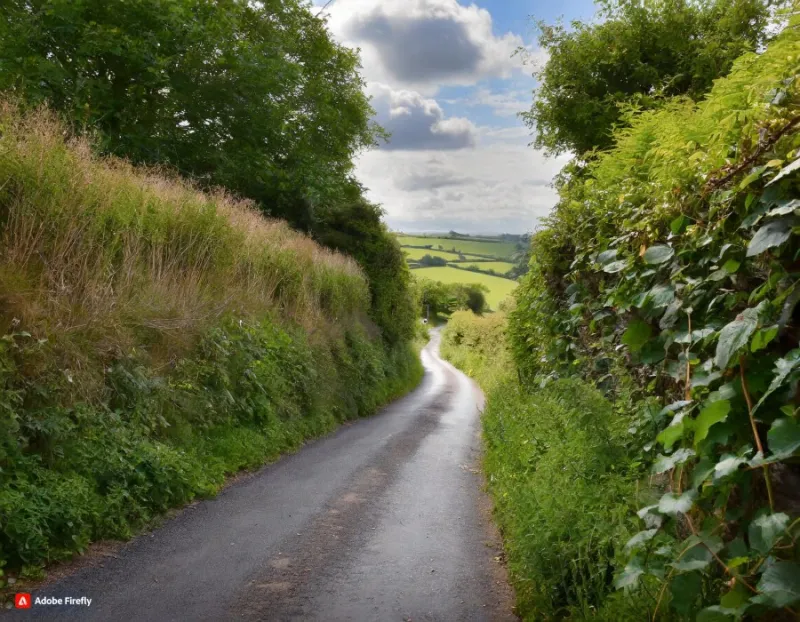
Single-track sections start appearing here. The etiquette is simple: use passing places to let faster traffic by, never park in a passing place, and give a thank-you wave. Everyone does it. It's the law. (Not legally, but morally.)
Durness itself has beaches that look transplanted from the Hebrides — Sango Bay is worth the detour on its own.
Day Four: Durness to Thurso
A shorter day, deliberately. Take the coast road towards Tongue, crossing the causeway at the Kyle of Tongue — one of the loop's great photo stops. If you're feeling energetic, the walk up Ben Loyal's lower slopes or a wander around the ruins of Castle Varrich will stretch the legs.
Thurso has supermarkets, fuel, and everything else you'll want before the north coast proper. Top everything up.
Day Five: Thurso to John o' Groats and Wick
The northern edge. It's flatter and gentler driving, with big skies and the constant presence of the sea. John o' Groats is touristy, yes, but the signpost photo is a rite of passage — and Duncansby Head, a few minutes away, has sea stacks that rival anything on the route.
Overnight near Wick or head slightly inland to quieter sites.
Day Six: Wick to Dingwall
The long haul south. The A9 is the widest, easiest road on the loop — a relief after days of single-track. Break the journey at Dunrobin Castle near Golspie, which looks like a French château that got lost on the Moray coast, or at the falls of Shin to watch (with luck) leaping salmon.
Day Seven: Dingwall back to Inverness
An easy final leg. If time allows, detour around the Black Isle — rolling farmland, a distillery, and bottlenose dolphins at Chanonry Point if the tide's kind. Then it's back to Inverness, wiser, calmer, and probably already arguing about next year's route.
Wild Camping vs Sites: What's Actually Allowed
Scotland's right to roam is genuinely more forgiving than England's, but "wild camping" in a motorhome is a grey area. The Scottish Outdoor Access Code applies to pitching a tent on foot, not parking a two-tonne vehicle. In practice, overnight parking in a layby is tolerated in many spots — but the NC500's popularity has caused real problems with litter and verge damage, and local attitudes have hardened.
Our advice: use formal campsites where you can, and if you do stop overnight informally, arrive late, leave early, take everything with you, and never light fires. Motorhome-friendly apps like Park4Night will show reviewed spots. Support local businesses along the way — it's the best thing you can do to keep communities on side.
Fuel, Supplies and the Boring Stuff
- Fill up whenever you pass a garage with a queue-free forecourt. Distances between stations can stretch beyond 60 miles.
- Ullapool, Thurso and Wick are your main resupply points.
- LPG: check availability before you travel if your motorhome runs on it — not every Highland garage stocks it.
- Water and waste disposal are available at most campsites; don't dump grey water in laybys.
When the Weather Turns: Which Bits to Skip
The Highlands don't do mild weather. If you're hit with proper storms or driving rain, here's what to cut:
- Skip Bealach na Bà. The Applecross pass is the loop's most dramatic drive and its most demanding — 45-degree hairpins and fog that arrives without warning. In bad weather, take the coast road to Applecross instead, or skip the peninsula entirely.
- Skip the far northwest in gales. The coast around Durness and Cape Wrath is spectacularly exposed. Swap for the sheltered east side.
- Don't push through on the A9 in crosswinds. A high-sided motorhome plus a 60mph gust is not a fun combination.
The loop will still be there next time. That's the beauty of it — you don't have to do it all in one go, and you definitely don't have to do it in the rain.
A Final Word for the Nervous
Every experienced NC500 driver was once a beginner white-knuckling their first passing place. Take it slow, pull over regularly, wave at everyone, and remember that the roads are quiet for a reason: the reward is views you simply can't get anywhere else in Britain. Seven days is enough to fall for it. It's rarely enough to be done with it.