Switch the Engine Off, Look Up: Chasing Britain's Darkest Skies by Motorhome
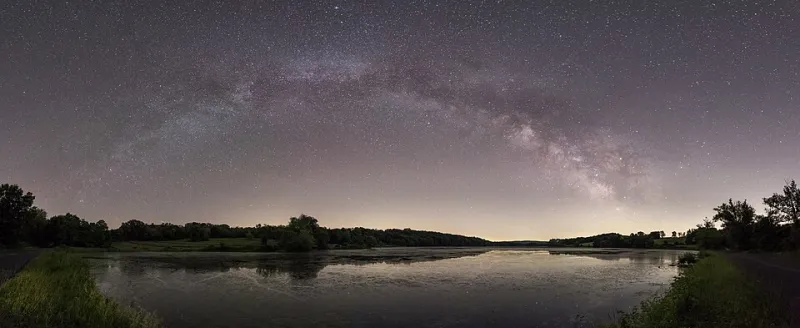
Photo: Juliancolton, CC BY-SA 4.0, via Wikimedia Commons
There's a moment on every good stargazing trip when you step out of the van, let your eyes adjust for ten minutes, and then genuinely gasp. The Milky Way, visible with the naked eye, smeared across the sky like spilled flour. If you've only ever lived under town or city glow, it doesn't feel real the first time.
Here's the thing: you can't plan that moment around a hotel. The best dark sky sites in Britain are remote by design — that's rather the point of them — and the ones worth visiting are rarely next to anywhere you'd want to sleep. A motorhome solves this neatly. Your bed is already there. When the clouds part at 11pm, you're not facing a forty-minute drive back down a single-track road. You just walk outside.
The Route: Three Parks, One Loop
We'd suggest a fortnight if you can swing it, though a determined week can cover the highlights. The loop runs from Kielder in Northumberland, down through the Elan Valley in mid Wales, and finishes in Galloway Forest Park in southern Scotland.
Leg one: Kielder Water and Forest Park, Northumberland. Europe's largest designated Dark Sky Park, and mercifully easy to reach from most of England. Base yourself near the reservoir — there are campsites around Kielder Water that welcome motorhomes, and the Kielder Observatory runs booking-only events that are worth planning your dates around. On a clear February night, the Orion Nebula is visible without any kit whatsoever.
Leg two: the Elan Valley, Powys. A long, lovely drive down through the Marches, and worth it. The Elan Valley Estate holds International Dark Sky Park status, and the Victorian dams make an unexpectedly dramatic foreground for night photography. This is proper mid-Wales — sparse, quiet, sheep-forward. Stock up in Rhayader before you head into the valley because options thin out fast.
Leg three: Galloway Forest Park, Dumfries and Galloway. The UK's first Dark Sky Park, and still one of its best. The three visitor centres all have viewing areas, and the Galloway Astronomy Centre runs sessions if you'd like someone else to find the planets for you. It's also a sensible final leg if you're returning a hire van in Scotland or the north.
Planning Around the Moon (Yes, Really)
This is the single biggest mistake first-time stargazers make: they book the trip, arrive, and discover a full moon washing out the entire sky. A bright moon will happily outshine all but the brightest stars.
So work backwards:
- New moon (roughly one week either side of it) is prime time. Book these dates if you can — this is your dark sky window.
- First and last quarter moons give you dark evenings for part of the night. Workable, if you're flexible.
- Full moon — honestly, don't. Unless moonlit landscapes are your thing, in which case crack on, but the Milky Way will be invisible.
Any moon phase calendar or weather app will show you the lunar cycle months ahead, so check it before you book your hire dates, not after. Pair that with an aurora and cloud forecast — the Met Office and dedicated aurora alert apps do the job — and you've got a fighting chance of clear skies.
Where to Sleep (Legally)
Scotland is your friend here. The right to responsible access means you can overnight in a motorhome in many suitable spots in Galloway, provided you're sensible: arrive late, leave early, take everything away with you, and keep numbers low. Forestry and Land Scotland manages several forestry car parks where a quiet overnight is generally tolerated — check current guidance before you go.
In England and Wales, the rules are stricter and there's no general right to camp, so plan around campsites. The good news is that many of the campsites near Kielder and the Elan Valley are small, dark, and happy to host motorhomes — and honestly, a campsite pitch under a genuinely dark sky beats a wild spot under a streetlight every time.
Staying Warm While You Wait
Stargazing is mostly standing still in the cold, which is a brutal combination. A few things that make the difference:
- Run the heating before you head out, then let the van hold the warmth while you're stargazing. You'll appreciate it when you come back in.
- Take more layers than you think. A woolly hat and proper socks in autumn, plus a thermos, transforms the experience.
- A reclining chair beats standing. Looking straight up cranes your neck within minutes. Deckchairs, camping recliners, or even just lying on a mat on the ground all work.
- Red light only. Torches with a red mode (or a bit of red cellophane over the lens) protect your night vision and everyone else's.
Give Your Eyes a Chance
Last practical note: it takes twenty to thirty minutes for your eyes to fully adapt to darkness. Every phone screen you check resets the clock. Put it away, let the dark do its work, and be patient. The sky rewards it.
You don't need a telescope. You don't need to know a single constellation. You just need a genuinely dark sky, a clear night, and somewhere warm to retreat to when your nose gives up — and that last part is exactly what the motorhome is for.