Two Rings and a Dream: How to Actually Cook in a Motorhome (and Why the Keswick Curry Wins)
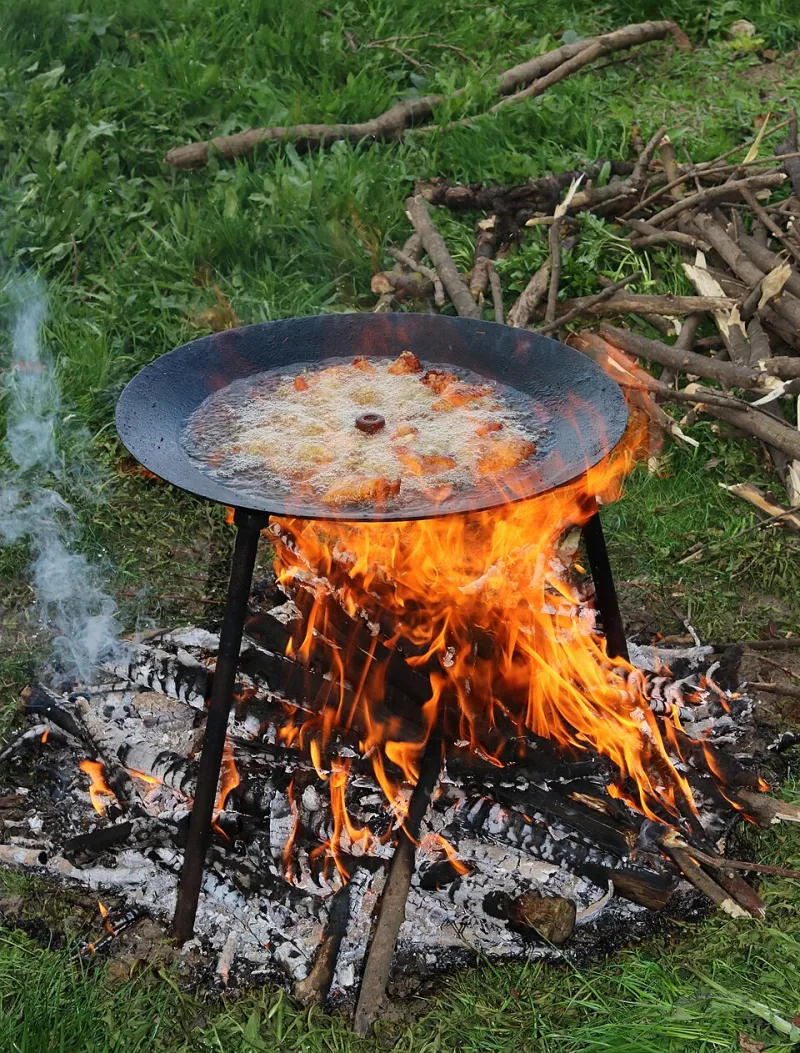
Photo: George Chernilevsky, Public domain, via Wikimedia Commons
Every hire motorhome comes with a kitchen. Every hire motorhome kitchen contains, roughly, two burners, a sink the size of a postcard, and a worktop that disappears under drying washing-up by day two. And yet — and we say this as people who've watched hundreds of hirers drive off — some of the best holiday meals we've ever heard about were cooked on exactly that setup, in a drizzle, in a car park in Keswick.
So let's talk about cooking on the road properly. Not the aspirational Instagram version with the cast iron skillet and the sourdough. The real one.
First, a confession: does anyone actually use the kitchen?
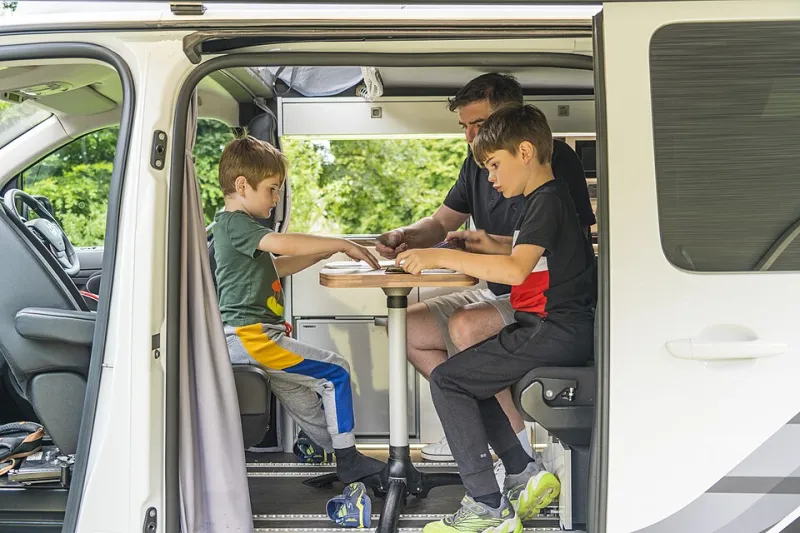
Yes — but less than you'd think, and differently than you'd expect. In our experience, most hirers use the hob for breakfast and maybe one proper dinner. Lunch is often a pasty in a layby, and nobody's judging. The kitchen's real value isn't that you'll cook three square meals a day; it's that you can. It's freedom from booking restaurants, freedom from hungry children at 6pm in the middle of nowhere, and freedom to make a brew whenever the mood strikes.
If you go home having used the hob ten times over a week, that's a success, not a failure.
The meals that work on two burners
The golden rule: one pan, minimal chopping, ingredients that forgive you. You're cooking in a moving vehicle with limited water and a fridge that's more of a chilled suggestion than a fridge.
The Keswick Curry. Our unofficial national dish of motorhome hire. One onion, a jar of curry sauce (we won't tell), a pack of pre-cooked rice, and whatever protein survived the journey. Twenty minutes, one pan, and it tastes like a thousand pounds better than it has any right to. Every Lakes town has a decent curry house or an Indian supermarket if you want to do it properly — but the jar version, eaten with the habitation door open and a view of Blencathra, is genuinely elite.
Sausages, generally. British sausages are the motorhome cook's best friend. They fry themselves happily, they go with anything, and every farm shop in the country sells a local variety so your dinner doubles as sightseeing.
Big breakfasts. Bacon, eggs, beans, toast if you're brave with the grill. This is where the motorhome kitchen earns its keep. Nobody remembers a hotel breakfast as fondly as a full English cooked while it hammers on the roof.
One-pot pasta. Chuck pasta, passata, garlic (the jar kind), and whatever veg is wilting into one pan with water. It sounds wrong. It tastes fine. It minimises washing up, which at this point is the real objective.
The meals that are not worth it
A brief register of shame:
- Anything fried at temperature. Two burners, no extractor to speak of, and fabric upholstery. You'll be smelling chips until the end of the hire.
- A Sunday roast. The oven, where fitted, is small, temperamental, and will heat the entire vehicle to sauna conditions. Take yourselves to a pub instead. That's what pubs are for.
- Elaborate baking. We've seen the sourdough starters. We've seen the tears.
- Anything requiring more than two pans. You have two pans. It's maths.
Where to stock up: farm shops and friendly forecourts
The joy of motorhome catering is that the UK is absurdly well supplied with places to buy excellent food at slightly alarming prices. A few habits worth adopting:
Farm shops are your friends. Nearly all have generous parking, decent coffee, and sausages that will redefine your week. Look for them on the A-roads between destinations — the ones with butchers counters rather than garden centres attached are usually the best bet.
Supermarkets: plan around the car park. Most Tesco, Sainsbury's and Aldi stores are fine for a motorhome if you park in the far corners and avoid the height barriers (if your vehicle is over around 2.9m, treat barriers as a hard no). Lidl and Aldi are brilliant for cheap, forgiving ingredients. Morrisons cafés have saved many a rainy Tuesday.
Village shops and butchers. Slower, pricier, infinitely better. A butcher in rural Cumbria or mid-Wales will sell you dinner and a conversation.
Do a proper shop before you leave. The first shop of the trip sets the tone. Buy the boring things — oil, salt, teabags, foil — because the motorhome won't have them, and village shops charge like they're made of gold.
A note on gas, water and common sense
The hob runs on LPG, and there's plenty of it for a normal week's cooking — you're not going to run out making curries. Use the sink for washing up sparingly, keep the fresh water topped up, and empty the wastewater at proper disposal points rather than the scenic layby, because someone has to share this country with us.
The point of it all
Cooking in a motorhome isn't about the food, really. It's about the fact that dinner happens wherever you've parked, on your schedule, with the window open to wherever you've got to. Some nights that's a curry in Keswick with rain on the roof. Some nights it's sausages watching the sun go somewhere over the Brecon Beacons.
Both are better than a chain restaurant off the M6. We'd stake the deposit on it.