Wheels on the Water: How to Take a Hired Motorhome Across to Ireland and the Islands
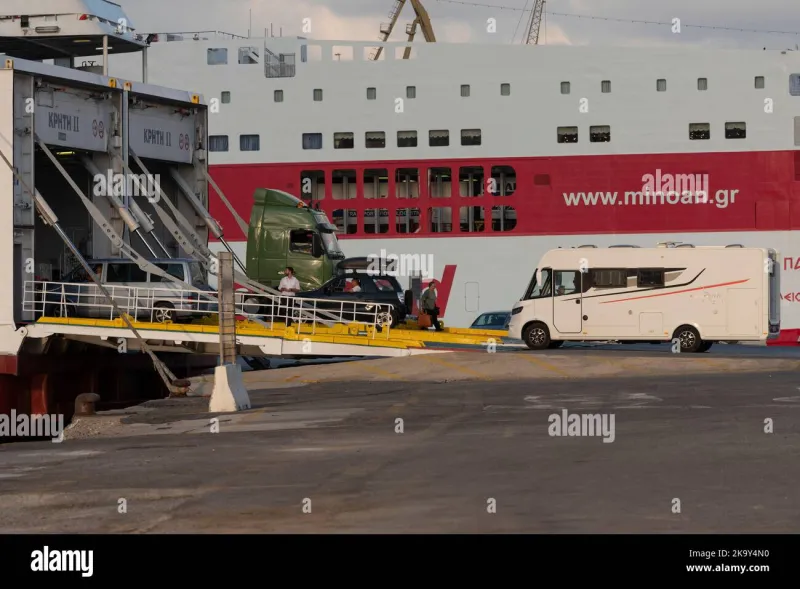
Photo: motorhome loading onto ferry deck, via c8.alamy.com
There's a moment on every Irish Sea crossing where the British coastline slips behind you and the whole trip suddenly feels bigger. The good news? Taking a hired motorhome across the water is far easier than most first-timers assume. The slightly less good news: there are a handful of things you need to sort out before you roll up to the terminal, and the check-in desk is not the place to discover them.
Yes, You Can Take a Hire Van on a Ferry — But Check First
Most ferry operators happily carry motorhomes; they're booked as a vehicle type, not an afterthought. The catch is length. Your van's exact length and height go on the booking, and if you guess wrong, you can be charged a fee at the port or, worse, turned away if the sailing is full.
Before you book anything, ask your hire company two things: the van's precise dimensions (including any bike racks or roof boxes, which count) and, crucially, whether the rental agreement permits ferry travel at all. A few insurers have restrictions on taking vehicles off the mainland, and you want that conversation happening months before departure, not at the terminal.
Which Crossing Makes Sense?
For Ireland, you've got two main corridors: Holyhead to Dublin, and Cairnryan to Belfast or Larne. The Holyhead run is the busiest and often priciest; the Scottish routes can be cheaper and slot neatly into a western Scotland loop.
A typical motorhome crossing costs anywhere from £100 to £300 each way depending on season, sailing time and van size. Book early for summer — the July and August sailings fill up months ahead, and prices climb as space disappears.
For the islands, things get more interesting. The Isle of Man is served from Heysham and Liverpool, while the Hebrides run CalMac ferries from Oban, Mallaig and Uig. Those Scottish routes are short — often under an hour — and relatively cheap, which makes island-hopping one of the best value upgrades you can make to a Highland itinerary.
Cabin or Reclining Seat?
On the longer Irish Sea crossings, this is the genuine dilemma. Day sailings make it moot, but if you're on a night boat, here's the honest breakdown:
- A cabin costs extra but gives you a proper bed and a decent night's sleep — worth it if you're driving the following morning.
- A reclining seat is cheaper and perfectly tolerable for one night, though you'll be sharing a lounge with a hundred other people's snoring.
- Your own van, on some ferries, is off-limits during the crossing, so you can't just kip in the back. Check the rules per operator.
Our take: if the trip's long and the drive after the ferry is a big one, pay for the cabin. Starting Ireland on four hours' sleep is a false economy.
The Paperwork Questions Everyone Forgets
This is where hirers come unstuck. Get answers to these before you leave the depot:
- Am I insured to drive in the Republic of Ireland and Northern Ireland? They're separate jurisdictions, and if you're doing both (very easy to do), confirm cover covers both.
- Do I need a Green Card or VE103 form? Post-Brexit, some insurers issue a VE103 vehicle-on-hire certificate for travel abroad — ask for one even if you're told it's not needed, and carry a copy.
- What's the breakdown cover situation overseas? UK-only recovery policies won't help you on the N71 in County Kerry.
- Can I take the van on CalMac and other island ferries? Usually yes, but confirm in writing.
Also worth knowing: Ireland uses metres for speed limits on motorways but miles per hour on some older signage confusion is mostly resolved now — just drive to the posted limit and you'll be fine.
Is It Worth the Money?
Honestly? For Ireland, almost always. The Wild Atlantic Way, the Ring of Kerry, the emptiness of Donegal — these are motorhome roads made in heaven, and the ferry cost amortises across a week or two of brilliant driving.
For the islands, it depends on timing. A CalMac hop to Mull or Skye is cheap and transformative. The Isle of Man works beautifully if you fancy something genuinely different — no booking-ahead stress, a proper TT-course road to (carefully) enjoy, and glens that most UK holidaymakers never see.
The one scenario where we'd say skip it: a short trip under five days. By the time you've paid for two crossings and lost half a day each way, you might be better off staying mainland and going deeper rather than wider.
A Few Practical Tips
- Arrive at the terminal 60–90 minutes early with a motorhome; loading is slower than cars.
- Turn off your gas at the bottle before boarding — it's a standard requirement.
- Book a flexible or amendable fare if it's offered. Weather cancels sailings, especially on the western routes.
- Pack a overnight bag with essentials rather than burying everything in the garage lockers.
The Bottom Line
The ferry isn't a complication — it's the bit that turns a good motorhome trip into a proper adventure. Get the dimensions right, ask the insurance questions early, and pay for the cabin. The open road, as ever, is on your terms. It just occasionally needs a boat.