The Overnight Shift: Why Festival Crews and Contract Nurses Are Swapping B&Bs for a Hired Motorhome
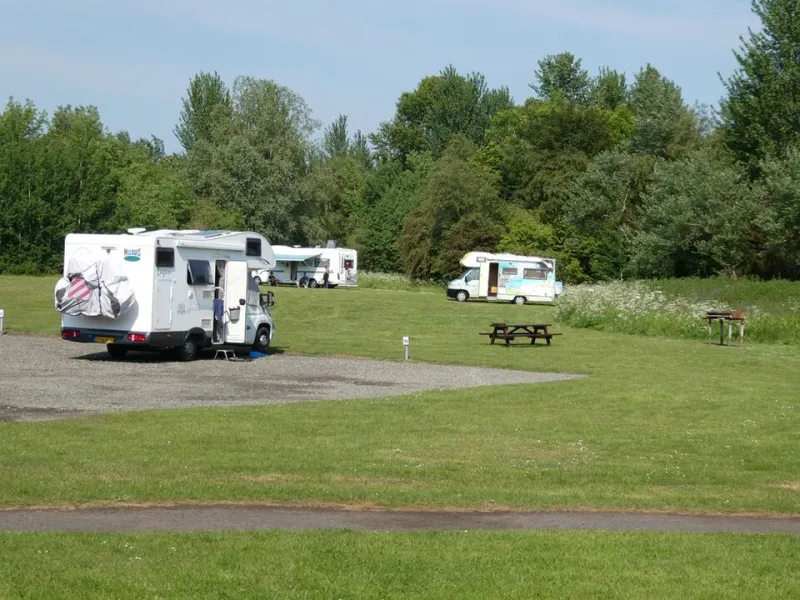
Photo: Oliver Dixon , CC BY-SA 2.0, via Wikimedia Commons
The New Face of Motorhome Hire
Ask most people why you'd hire a motorhome and they'll picture the Lake District in August, a kettle on at dawn, maybe a dog in the cab. But there's a quieter, less photogenic boom happening: people hiring motorhomes not to travel, but to live — for a fortnight of night shifts at a hospital in Leeds, a six-week film shoot outside Bristol, a summer of festival builds from Glastonbury to Glasgow.
We've had enough of these enquiries at Trek that it's worth talking about properly. Because living in a hire for work is a genuinely different proposition from touring, and getting it wrong can be expensive.
Why It Works — and Why People Do It
The pitch is simple. A decent B&B near a city runs £70–£100 a night. A chain hotel, similar. Over a four-week contract, you're looking at £2,000–£2,800, plus you're eating pub dinners or meal deals. A motorhome hire might cost £700–£1,200 for the same period, you cook your own food, and you sleep in the same bed every night regardless of which site or street you're parked on.
We spoke to Dan, a rigging contractor who spent last summer working festivals across England and Wales. "The Travelodge maths never made sense," he told us. "I'd be driving from site to site — Reading one week, somewhere in Yorkshire the next. With the van, my accommodation just comes with me. I'm up a ladder at eight, and my bed's twenty feet away."
A locum nurse we spoke to, who asked not to be named, used a hire for a six-week placement at a hospital on the edge of Sheffield. "The staff accommodation had a six-month waiting list. A campsite ten minutes' drive away with a seasonal pitch cost me less per week than two nights in the Premier Inn. I could make proper food after a twelve-hour shift instead of a Tesco meal deal."
Choosing the Right Vehicle for Working Life
Not every motorhome suits this. A couple touring the Cotswolds needs different things from a van than someone on a construction site at 6am.
Payload matters. If you're carrying tools, PPE, flight cases or camera kit, check the payload figure carefully — we cover this in most handovers, but it's crucial here. A typical panel-van conversion might offer 500–600kg of capacity, which disappears fast with kit plus your own gear. Overloading is a legal offence, not a negotiable quibble.
Hook-up is your best friend. Working long shifts means you'll want the heater running when you get back, a proper fridge, and batteries that aren't flat. A campsite with electric hook-up solves nearly everything. If you're relying on solar and leisure batteries alone, you'll live a more spartan life than you might expect in January.
Desk space is underrated. Some of our larger layouts have a dinette that converts into a genuinely usable workspace. If your job involves reports, rotas or call sheets, think about where you'll actually sit with a laptop. A cab-over bed above the driver's seat is fine for sleeping; it's rubbish for admin.
Consider a van conversion over an A-class. Lower profile means less attention when parked, easier access to multi-storey and site entrances, and better fuel economy on daily commutes.
Where Can You Actually Park? The Honest Answer
This is the part nobody sugar-coats. Sleeping overnight in a vehicle is not illegal in itself in England and Wales, but parking somewhere you're not allowed is. The rules that matter:
- Campsites and caravan clubs are the straightforward option. Many offer discounted weekly rates for longer stays, and some have worker-friendly policies. Book ahead near major hospitals or event sites — they fill up.
- Pub stopovers — schemes like Brit Stops exist, though they're aimed at tourers and usually expect you to buy dinner. Worth asking locally regardless; rural pubs near event sites often say yes for a small fee.
- Council car parks — some allow overnight parking, many don't, and enforcement varies wildly. Check signage, always.
- Private land with permission — if you're working a festival build or a film location, ask the site manager. Often the answer is yes, and sometimes there's even a generator.
- Wild camping is not a right in England. Scotland is more forgiving, but even there, the Outdoor Access Code expects you to behave like a guest, not occupy a spot for weeks.
The golden rule: one night, arrive late, leave early, take your rubbish with you. If you need to stay somewhere for a fortnight, find a campsite or negotiate properly. Don't be the reason the next person gets moved on.
The Cost Breakdown, Honestly
Let's do the sums for a four-week placement near a mid-sized English city.
- Motorhome hire (4 weeks, mid-season): roughly £900–£1,400 depending on vehicle and time of year
- Campsite with hook-up (weekly rate): £200–£350 per month
- Fuel (daily 10-mile round trip): £60–£100
- Food (self-catered): £200–£300
Total: roughly £1,400–£2,100.
Compare that to a B&B or hotel at £85 a night plus eating out — call it £2,700–£3,200 for the same month. You're saving somewhere in the region of £1,000, sometimes more, and you've got your own kitchen, bathroom and privacy.
There are extra costs to budget for: a refundable security deposit, insurance excess, possibly a one-way fee if your contract ends somewhere different. But even stacked up, the gap is usually decisive.
The Bits Nobody Mentions
- Showering. Campsite showers are fine. If you're on a site without facilities, you'll be showering in the van — which is doable but compact. Plan for it.
- Laundry. Laundrettes become your friend. Some campsites have machines; budget £3–£5 a wash.
- Winter working. A motorhome with a good diesel heater is genuinely warm. But water tanks can freeze — ask us about winterised vehicles if your placement runs through December.
- Insurance and usage. Make sure your hire agreement covers the kind of use you're putting it to. Living in it is fine; using it as a mobile workshop might not be. Ask before you book, not after.
Worth a Shift?
If you're a contract worker moving between sites — festivals, hospitals, film sets, wind farm maintenance, the list goes on — hiring a motorhome for the duration is often cheaper, more comfortable and considerably more flexible than a hotel. It's not glamorous. You'll occasionally be cold, occasionally be stuck in a layby waiting for a parking space to free up, and you'll definitely become weirdly attached to a kettle.
But as Dan put it: "I finish a twelve-hour shift, drive ten minutes, put the kettle on and I'm home. You can't put a price on that." Well — you can. It's about a grand a month less than the alternative.